Registration

Choose 3 classes, in which you want to participate.
Limited availability of seats - for each class there is maximum of 30 participants.
You cannot sign up for more than one class in a given hour - choose wisely!
Admission to classes is determined on a first-come, first-served basis,so don't delay in signing up.

Instructions

Enrollment is in the form of an intuitive “online store.”

The selection applies only to 3 blocks of classes, you do not need to sign up for a workshop common, for all participants.

In addition to the workshop topics, pay attention to their level.

LEVEL OPEN: Choose these classes if you're looking for an option that's suitable for everyone—regardless of your experience, just go with the topic that interests you.

EXPERT LEVEL: Sign up for this level only if you already have a solid foundation and are looking for a faster pace and advanced challenges.

Each of you will receive an email back with a list of selected classes. Remember that after registration there is NO possibility of changes. Please make conscious decisions.

Edition 2026 - description of classes

Below is a list of classes from which each participant will be able to choose 3 blocks of “vivências” during registration. Workshops include both vivências of your choice and shared activities. 

The themes of the classes change every year, but you'll always find elements of singing, rodeo leading, instrument playing and inspiration from other Brazilian musical traditions, such as samba and jongo.

Each group will have a maximum of 30 people, allowing for comfortable learning and active participation. Details of each elective block can be found below.

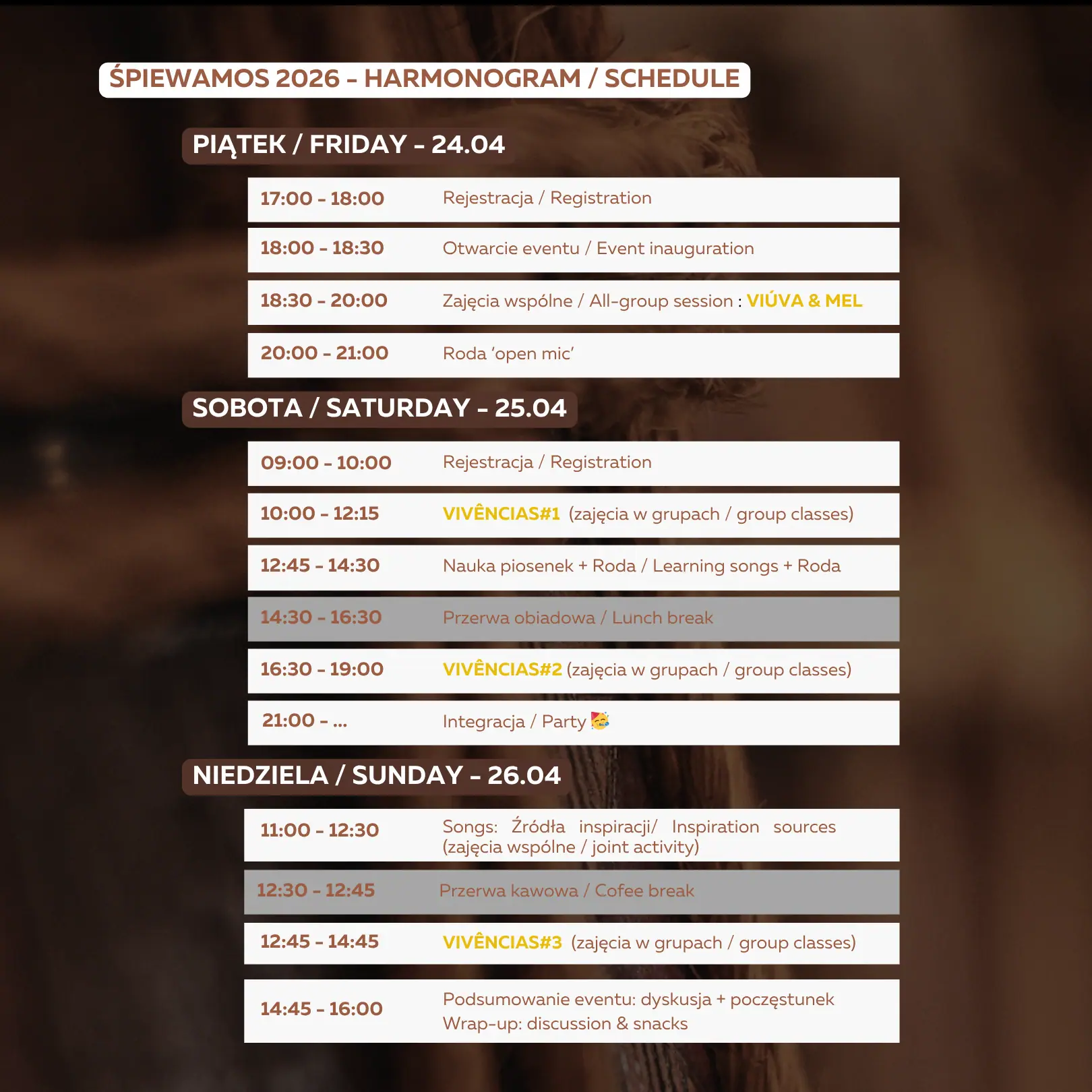
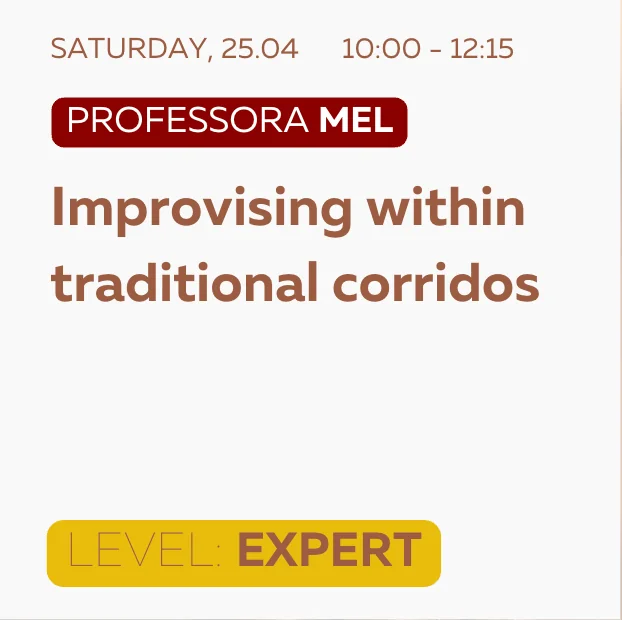
Vivências #1 - Saturday 10:00 - 12:15

Professora Mel

Improvising Within Traditional Corridos
Corridos are one of the most flexible spaces for musical dialogue in capoeira. In this class we will explore why their structure (metric, phrasing) makes them ideal for improvisation. Participants will practice improvising new lines within existing corridos using simple strategies and will be able to develop their own improvisation tools.

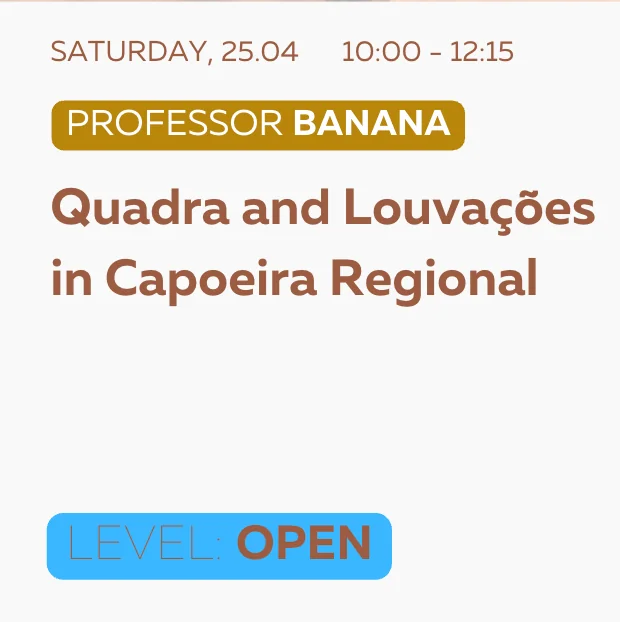
Professor Banana

Quadra and Louvações in Capoeira Regional
The beginning of the roda ritual is a unique moment that sets the tone for the entire event. In Capoeira Regional, singing the Quadra and Louvações is both an honor and a challenge. Their non-obvious, chant-like intonation and rhythm make them difficult to learn, while their lyrical form adds another layer of complexity to interpretation and full understanding of what is being sung. Under the guidance of Professor Banana, you will overcome these challenges, getting one step closer to opening the roda within your group.

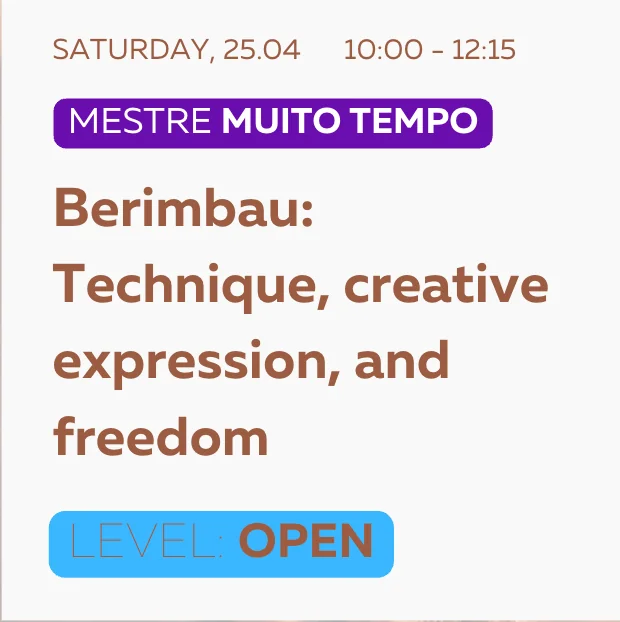
Mestre Muito Tempo

Berimbau: Technique, creative expression, and freedom
In this class we will go over technique to help you find more freedom in your Berimbau playing, which ultimately leads to you having more fun. Showing you how there are really no mistakes, just opportunities, if you can stay present. And discuss the structure of 2 types of variations, technically more full, and playing with space (more funky). funky).

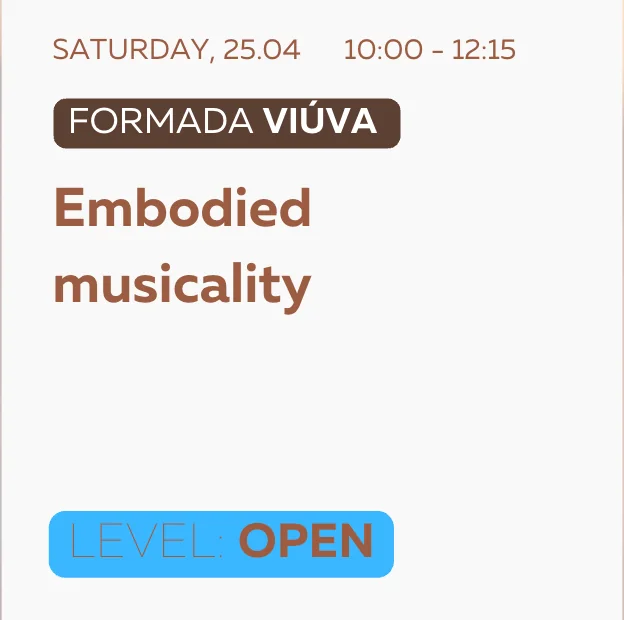
Formada Viúva

Embodied musicality
Classes focus on a physical anchoring of rhythm (palmas, body percussion, polyrhythm), and the voice and body rhythm coordination.
We will practice breath control and body/vocal release (simple vocal technique and relaxation exercises, etc.), and we’ll apply it to the collective rhythmic and vocal arrangement.

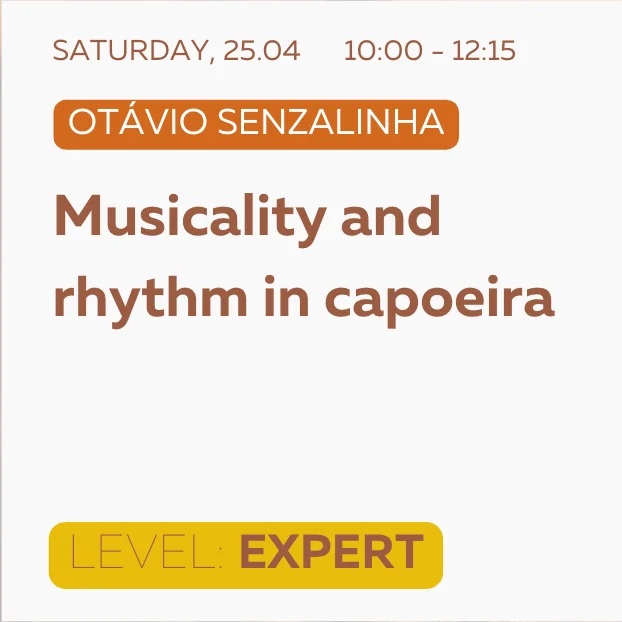
Otávio Senzalinha

Rhythm and musicality in capoeira
Exploration of capoeira rhythms through instruments such as the berimbau, pandeiro, and songs. The class focuses on how instruments, singing, and rhythm connect, helping students develop musical communication and awareness.

Vivências #2 - Saturday 16:30 - 19:00

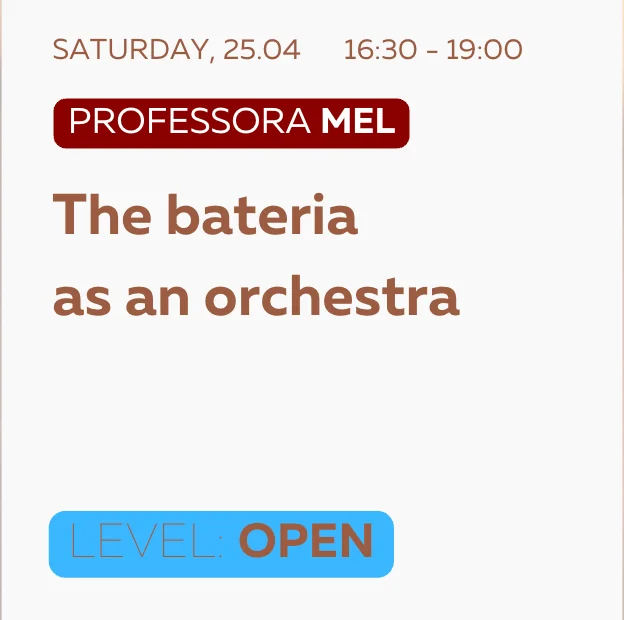
Professora Mel

The Bateria as an Orchestra
In a capoeira bateria, each instrument speaks, listens, and leaves space for the others. This class focuses on listening, balance, and musical direction inside the group. Participants will explore dialogue between instruments, echoing variations, and shifting attention between players. We will also work on tempo modulation: how a bateria accelerates or slows down, and how musicians can react collectively to these changes. Special attention will be given to the role of the berimbau and atabaque in initiating, guiding, or stabilizing tempo shifts, as well as strategies for interacting musically during these moments.

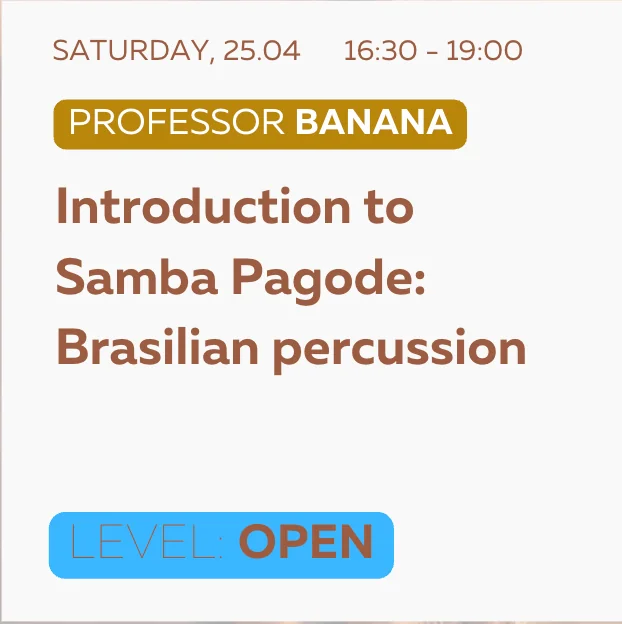
Professor Banana

Introduction to Samba Pagode: Brazilian percussion
Of all the samba subgenres (and there are many!), this one is most commonly heard in Brazilian homes. Originating in Rio de Janeiro, Samba Pagode (also known as Partido Alto, Samba Raiz, or Samba de Mesa) is the voice of the Brazilian people, expressed through instruments such as the cavaquinho, tantan, pandeiro, reco-reco, and tamborim. These classes offer an introduction to the rhythms, structure, and conventions that define this vibrant musical style.
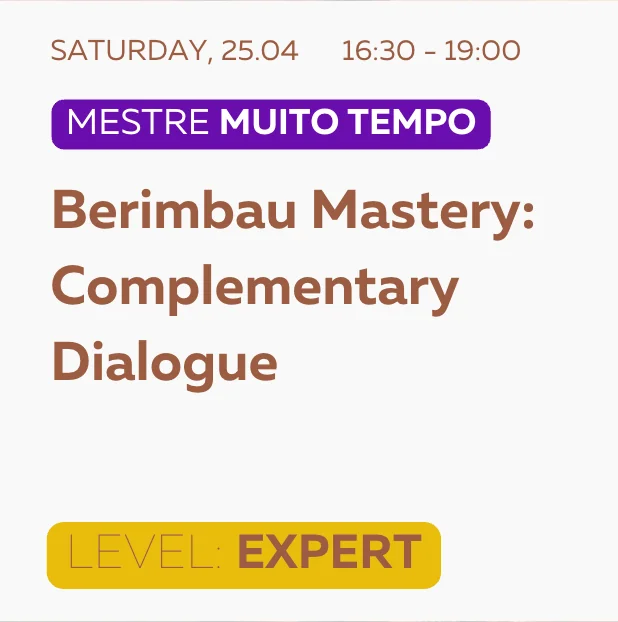
Mestre Muito Tempo

Berimbau mastery: complementary dialogue
Exercises to help you dominate the Berimbau and feel more comfortable so we can go into the dialogue between Berimbaus. Creating phrases and learning how to complement each other and not compete.

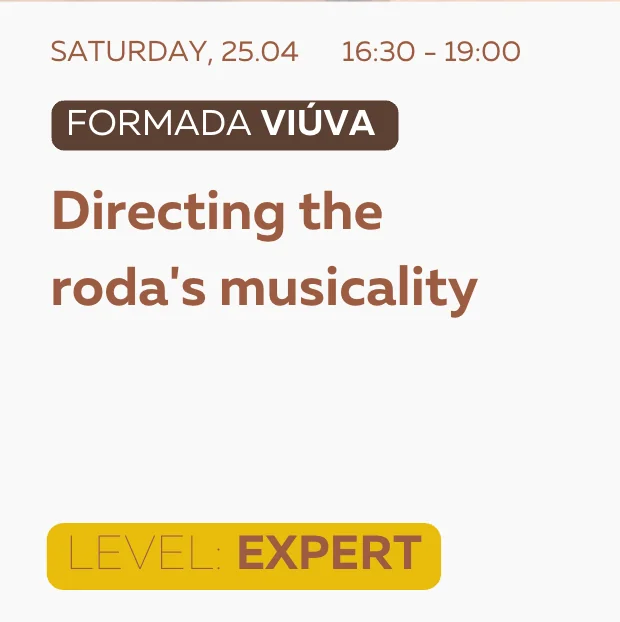
Formada Viúva

Directing the roda's musicality
In this class we will go over managing the roda and being a roda’s leader: guiding the collective dynamic through music and singing, creating a direction for the playing, an energy - developing it, maintaining it, transforming it.

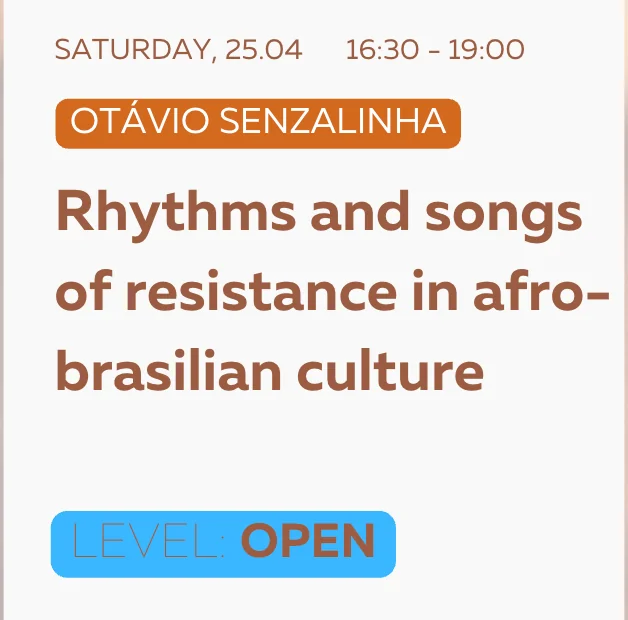
Otávio Senzalinha

Rhythms and songs of resistance in afro-brasilian culture
Class focused on traditional songs of resistance from Afro-Brazilian culture, with an introduction to Jongo. Students will explore the meanings and history behind the songs while learning basic rhythms and participation in collective singing.

Vivências #3 - Sunday 12:45 - 14:45

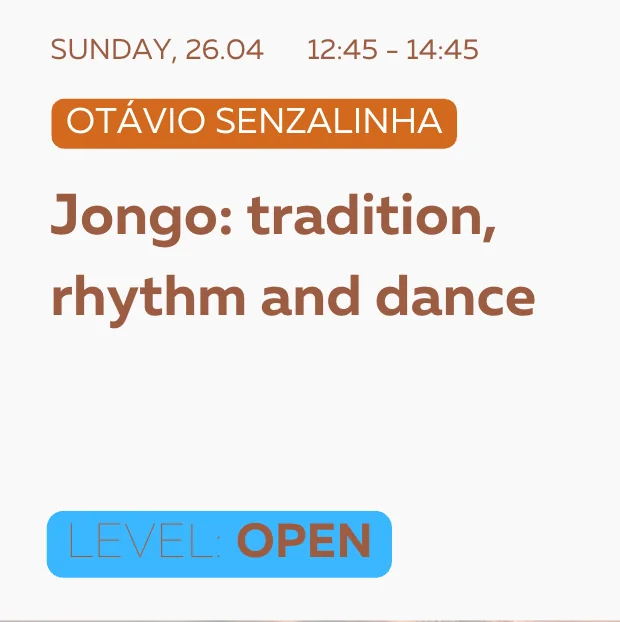
Otávio Senzalinha

Jongo: tradition, rhythm and dance
An experience with traditional Jongo rhythms and drums, exploring their rhythm and dance. The class integrates rhythm, movement, and cultural expression, introducing students to the foundations of Jongo through music and body movement.

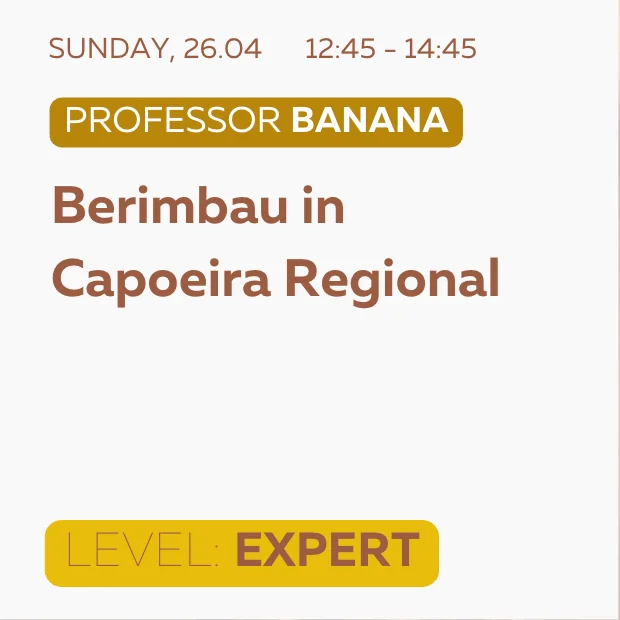
Professor Banana

Berimbau in Capoeira Regional
Mestre Bimba was undoubtedly one of the greatest berimbau virtuosos. It is impossible to match his level of mastery - but it is certainly worth trying! Professor Banana has prepared a rich set of knowledge, tips, exercises, and practical tools to help you better understand and master the rhythms, variations, and playing style of the distinctively resonant berimbau - an instrument especially favored by the King of Capoeira Regional.

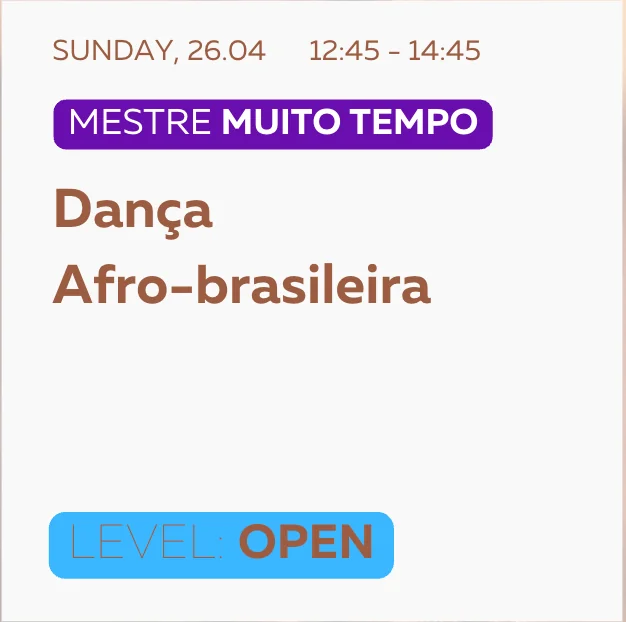
Mestre Muito Tempo

Dança afro-brasileira
Showing the relationship between music and dance, we will learn both sides. And also how it relates to Capoeira music.

Registration

We will announce the start of enrollment soon! 

Follow our social media:
pl_PLPolish
Your classes0
There are no products in the cart!
Go back
0
linkedin facebook pinterest youtube rss twitter instagram facebook-blank rss-blank linkedin-blank pinterest youtube twitter instagram